
The Instrument: CPICE
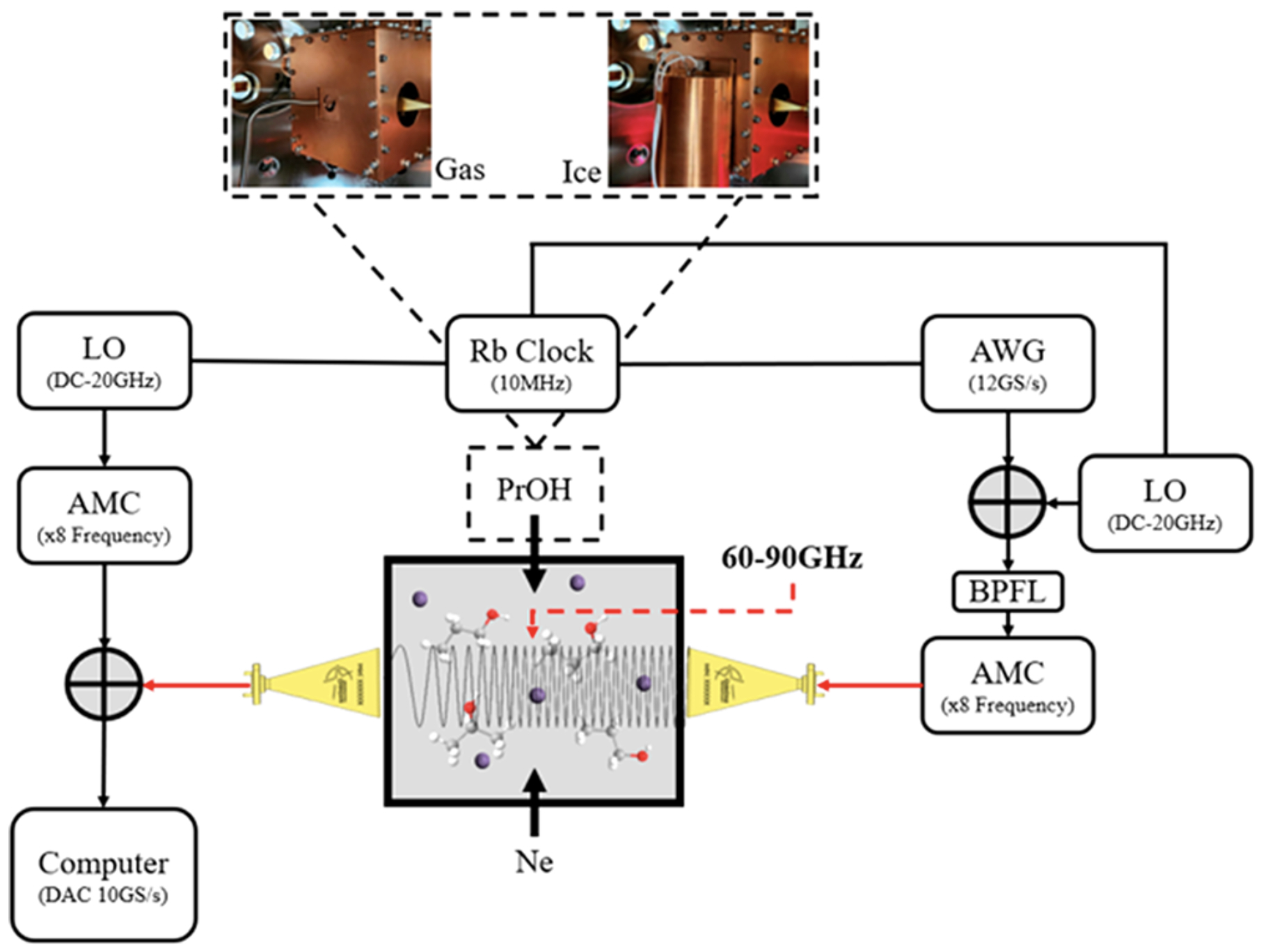
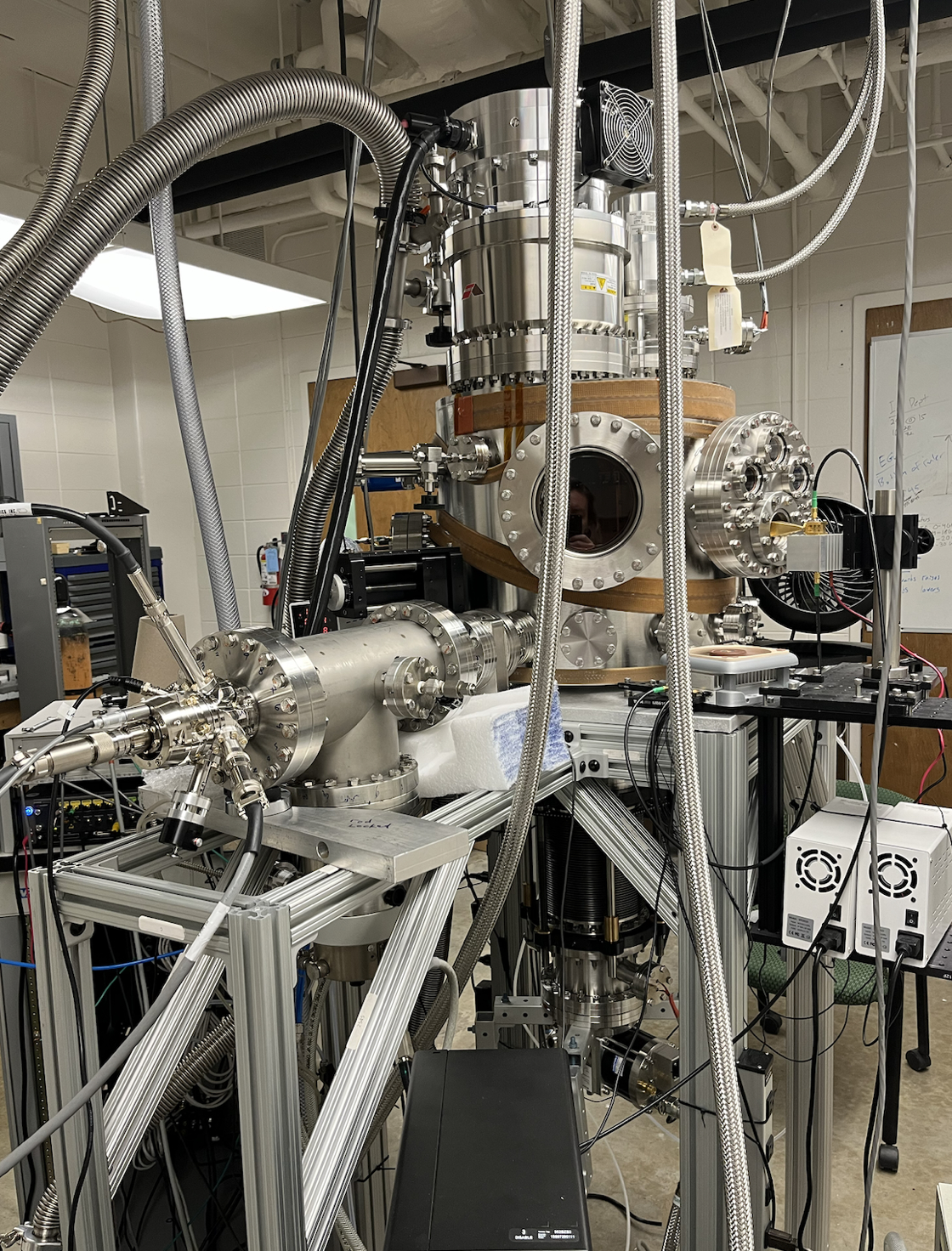
Our group has built a new instrument, Chirped-Pulse ICE (CPICE), to study molecules that have desorbed from an ice surface with broadband rotational spectroscopy in the mm-wave regime.
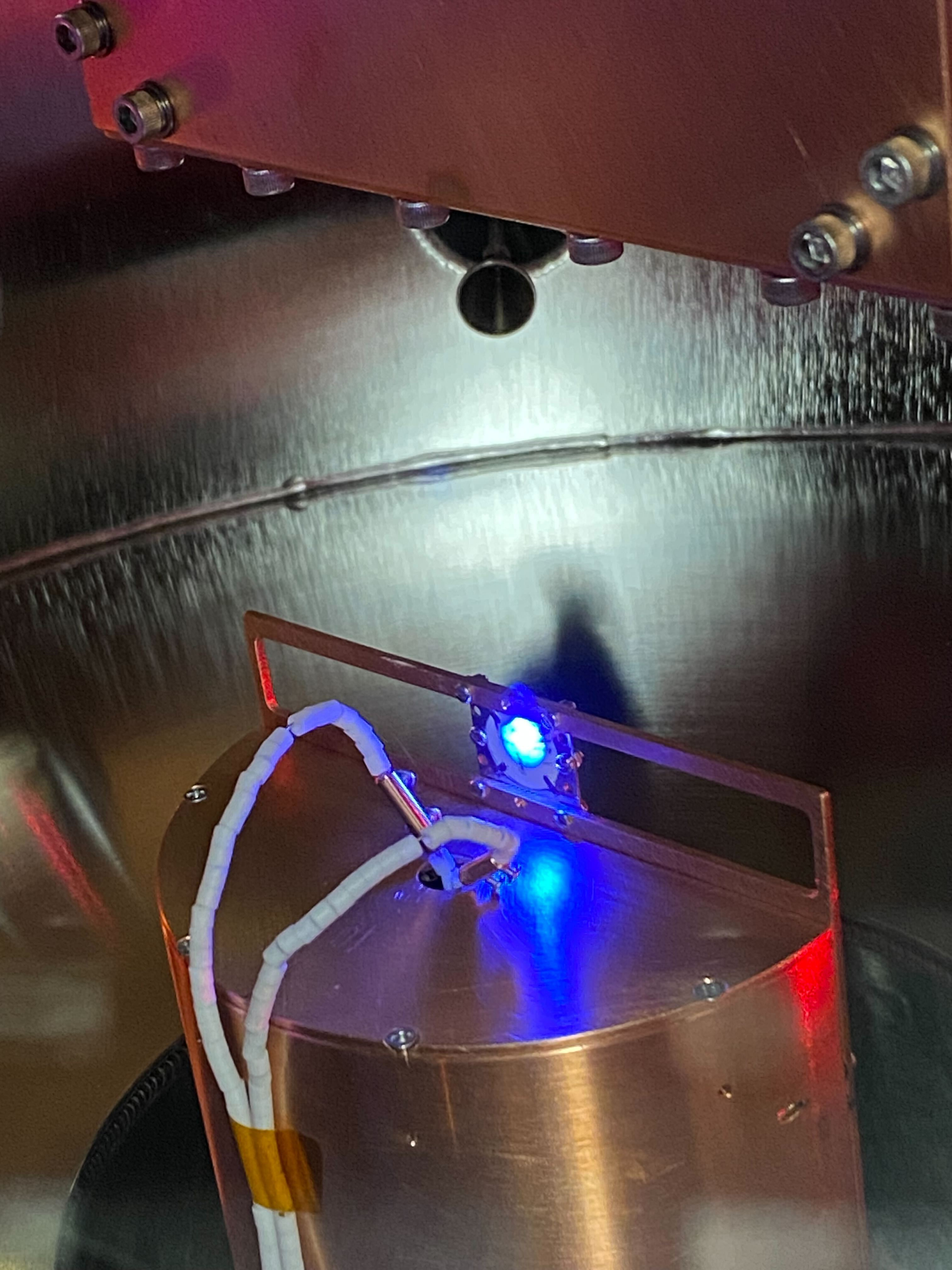
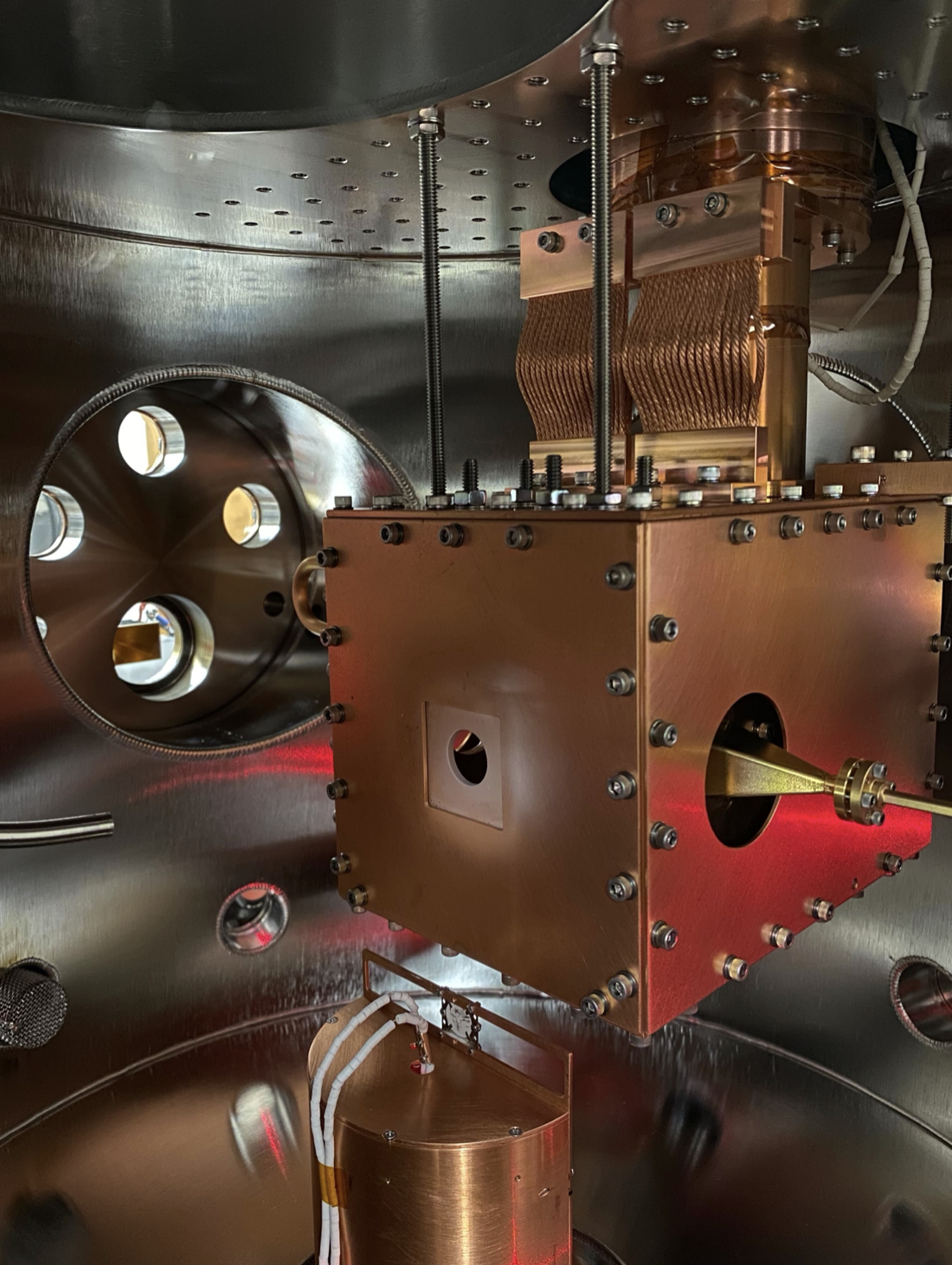
As shown below, the UHV apparatus contains a 4 K stage to generate neat or binary ices. Following deposition, the ice sample may be slowly warmed via temperature programmed desorption (TPD), or first exposed to ionizing radiation via a 10 K electron gun or VUV lamp before TPD begins. As the molecules reach their sublimation temperature and enter the gas phase, they are injected into the 25 K neon buffer gas cell thermally linked to a separate cold head, where they are promptly cooled and detected with chirped-pulse mm-wave spectroscopy.
Research in the Broderick Group
Given the structural-specific detection afforded by rotational spectroscopy, we have thus far captured several surprising results. For example, following desorption of a neat normal-propanol ice which contains 5 symmetry-unique conformational isomers, we find that sublimation is indeed conformer-specific — such findings should be considered in order to accurately understand sublimation dynamics, astrochemical models, and astronomical observations.

Our latest work again explores conformer-specific sublimation, in this case for normal-Propyl Cyanide. The relative abundances observed off of the ice yield a conformer temperature of ~ 56 K, which is much lower than their sublimation temperature of 170 K.

 The Broderick Group